


The Chemistry Quietly Revolutionizing Turbine Reliability
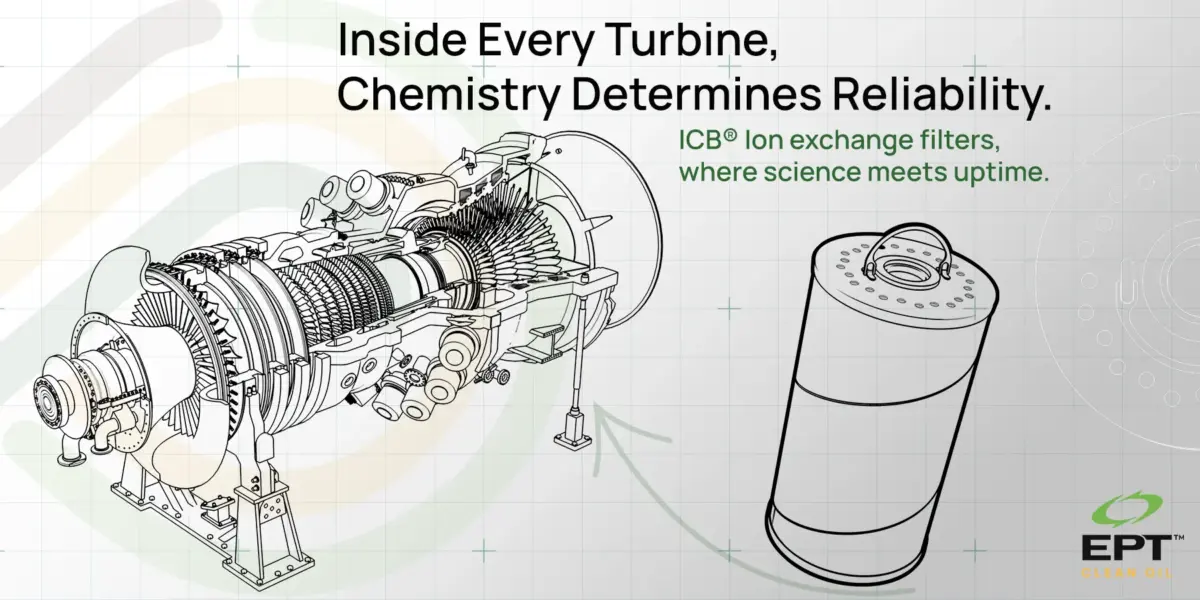
How patented ICB® ion-exchange technology is changing the economics—and the science—of lubrication
Every hour a gas turbine sits idle, money burns.
Even the most advanced industrial turbines, with reliability rates exceeding 99%, still incur tens of hours of downtime each year due to oil-related issues. Those “fractional” reliability losses? They can quietly cost millions over the turbine’s lifetime.
And at the root of many of these costly outages sits a microscopic culprit: varnish.
The Science Behind the Problem
Varnish isn’t sludge or dirt—it’s chemistry.
When turbine oils oxidize under heat and stress, they produce reactive molecules that gradually polymerize into sticky, insoluble films. These deposits cling to valves, bearings, and control surfaces, causing sluggish response, blocked flow, and eventually, forced outages.
Most operators fight varnish reactively. They flush systems, replace oil early, or add aftermarket chemicals (AMCs) once trouble appears. But these are bandages, not cures. The real issue is chemical saturation—once the oil is full of breakdown products, varnish formation is inevitable
The ICB® Ion-Exchange Breakthrough
Here’s where the science gets fascinating.
ICB ion-exchange filtration flips the whole problem on its head. Instead of filtering varnish after it forms, it prevents it from forming at all.
The secret? ICB ion-exchange technology is intentionally designed to attract and capture polar degradation molecules before they can link up and solidify. By stripping these reactive compounds from oil in their earliest dissolved state, the system keeps the lubricant chemically managed and unsaturated.
Think of it as giving your turbine oil a molecular-level detox—keeping its chemistry balanced, stable, and healthy for the long haul.
This isn’t just filtration. It’s lubricant chemistry management—a proactive, science-based way to protect assets from the inside out.
Why Doing Nothing Is the Most Expensive Option
A recent analysis from EPT Clean Oil™ compared the lifetime costs of different varnish-removal strategies on a GE Frame 7F turbine. The results were striking:
| Approach | Lifetime Cost (25 Years) | Savings vs Doing Nothing |
| Doing Nothing | $3,817,360 | – |
| AMC Additives (Best Case) | $1,375,698 | $2,441,662 |
| Depth Filtration | $2,113,800 | $1,703,560 |
| ICB® Ion-exchange Filtration | $529,800 | $3,287,560 |
ICB ion-exchange filtration delivers the lowest lifetime cost and the highest reliability improvement by managing the oil’s chemistry, not just its cleanliness.
By maintaining stable oil chemistry, ICB technology not only prevents varnish but also extends oil life, resulting in significant savings in both money and downtime.
Why It Works
Traditional filters treat the symptom—catching particles after they form.
ICB technology treats the cause—removing the dissolved chemical precursors before they can ever become varnish. By maintaining the delicate chemical balance of the oil, ICB effectively halts the varnish cycle.
It’s a small tweak in chemistry that delivers a massive shift in reliability.
The Bigger Picture: Smart Chemistry for Critical Assets
As energy producers chase efficiency and uptime, proactive maintenance isn’t optional—it’s essential.
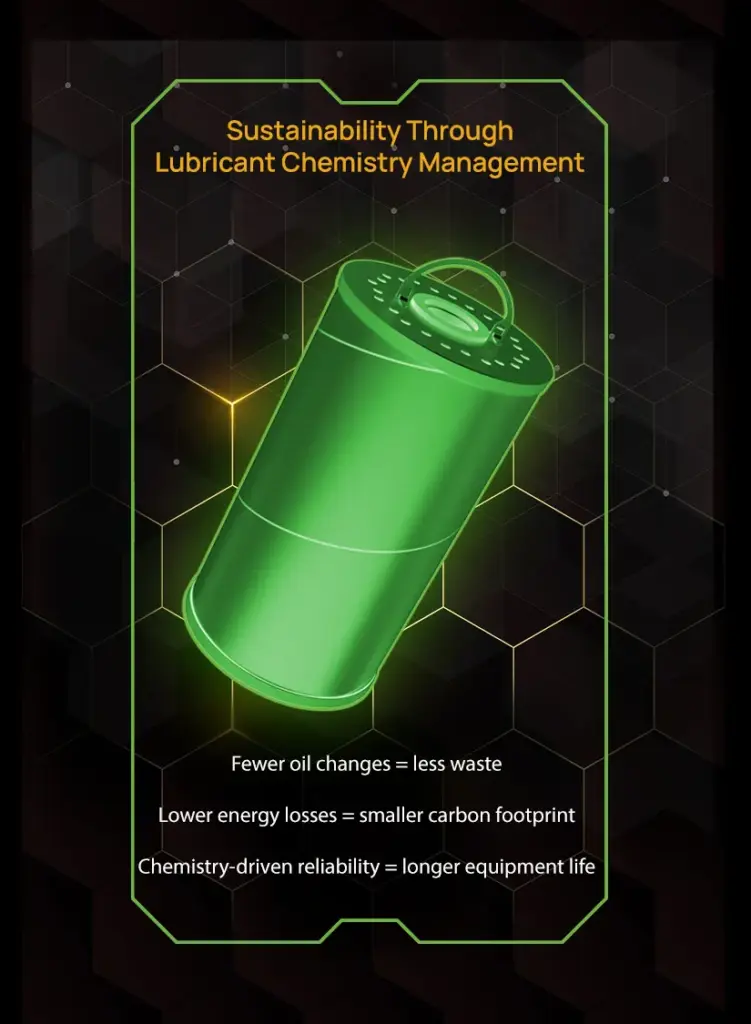
ICB represents the next leap in predictive maintenance. By managing lubricant chemistry rather than reacting to its failures, turbine operators can turn maintenance into a measurable performance advantage. The benefits extend beyond cost savings, aligning with broader industrial goals of sustainability and extended asset life.
By managing lubricant chemistry in real time, operators can:
- Reduce waste oil volumes and replacement frequency
- Eliminate varnish-related valve sticking and shutdowns
- Improve system thermal efficiency
- Strengthen compliance with ESG and reliability metrics
The future of reliability isn’t mechanical—it’s molecular.
Final Thought
Every drop of turbine oil holds a choice: let chemistry happen to you—or use chemistry to your advantage.
Patented ICB ion-exchange technology turns your oil from a consumable into a controlled chemical system—one that manages its own health, protects assets, and redefines the economics of uptime.
Because in the end, it’s not just about clean oil.
It’s about lubricant chemistry management—and the reliability it unlocks.
We are the Pioneers. We are EPT Clean Oil™. We are ICB®.
Request the full white paper below — “The Relative Lifetime Costs and Savings Associated with Varnish-Removal and Mitigation Technologies” — to explore the data, science, and lifetime economics behind ICB ion-exchange filtration and lubricant chemistry management.